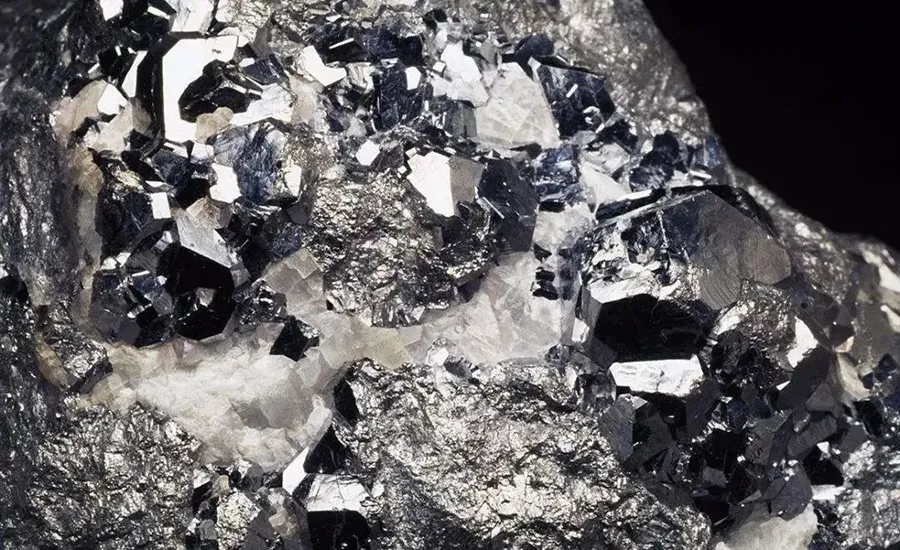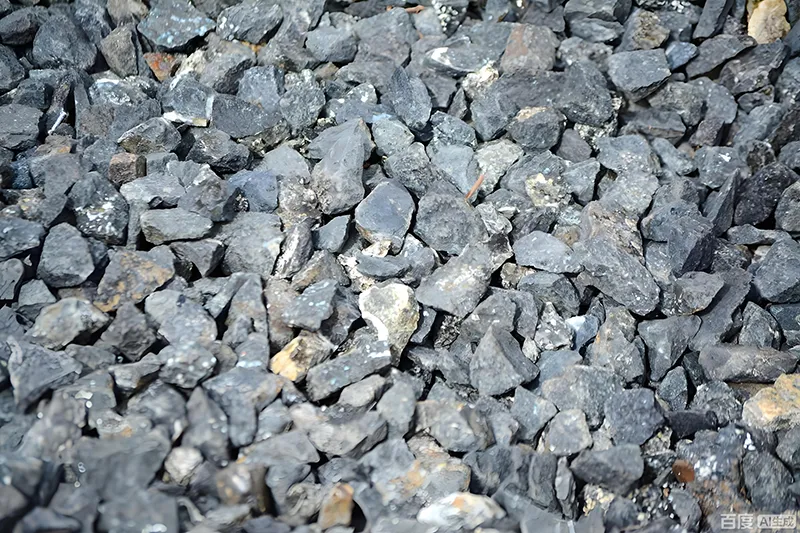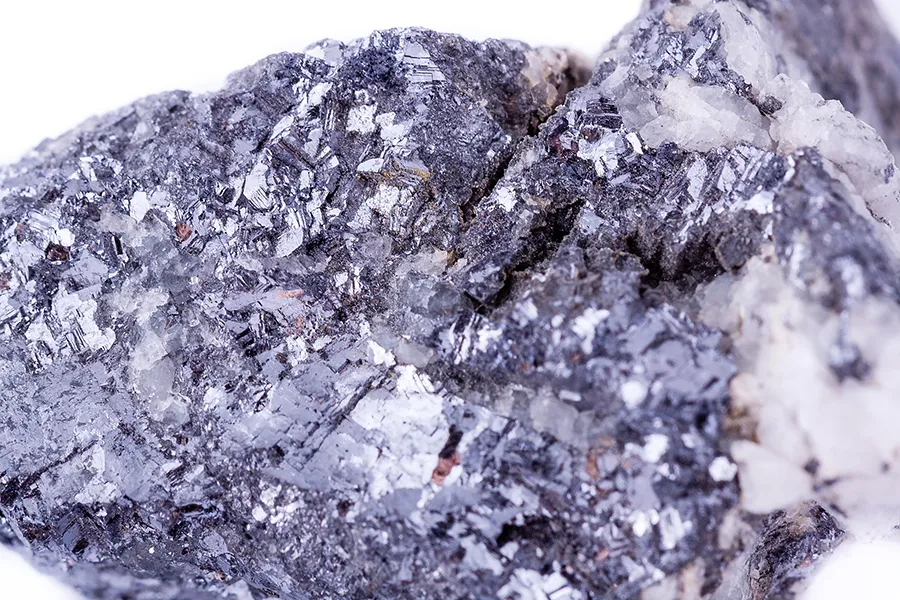
REO Minerals
7.6.1 Ore and Minerals Containing Rare Earth Oxide Elements(REOE) There are about 250…

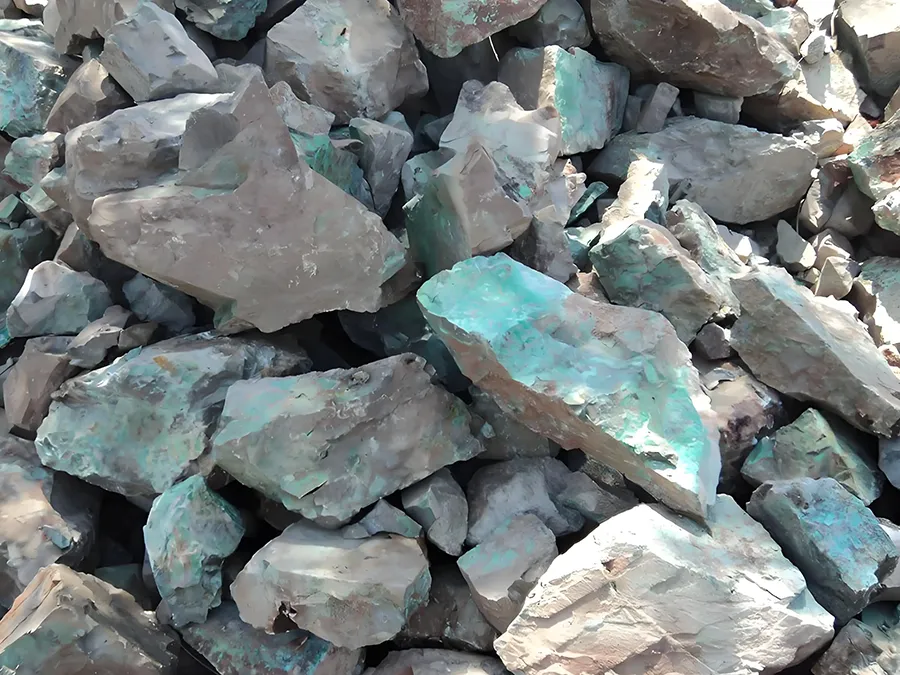
7.2.4 Beneficiation of Oxidized Copper Ores
The reserves of oxidized copper ore are small,generally located in the oxidation section of the upper part of the deposit,and the physical and chemical conditions experienced are extremely complex,so the ore properties are also extremely complex.In recent years,the separation of oxidized copper ores has gradually developed towards the refractory oxidized copper ores with low grade,high sliming and high oxidation rate.
7.2.4.1 The Floatability of Oxidized Copper Minerals
Malachite Cu₂(OH)₂CO₃contains 57.5%Cu and has good floatability.It can be directly collected by fatty acids(such as oleic acid,etc.)and their soaps or hydroxamic acid.Malachite can also be treated by sulphidization flotation,in which the mineral is activated by sodium sulfide and then collected by high -grade xanthate.Addition of ammonium sulfate can promote sulfuration.
Cuprite Cu₂O contains 88.8%of Cu and and has similar floatability to that of malachite.
Azurite Cu₃(CO₃)₂(OH)₂contains 55.3%of Cu and has similar floatability to that of malachite.The only difference is that it has better floatability than malachite when collected by fatty acids and their soaps,but needs a longer activating time in sulphidization flotation.
Chrysocolla(Cu,Al)₂H₂Si₂O₅(OH)₄·nH₂O contains 36.2%Cu and has poor floatability because of its strong hydrophilic surface.The main reason is that they are colloidal minerals with unstable composition and occurrence.The collector adsorption film can only form inside the pores of the mineral surface and is quite unstable.
Copper sulfate pentahydrate CuSO₄·5H₂O and atacamite Cu₂(OH)₃Cl are soluble minerals and are easy to dissolve in pulp and completely lost in tailings during flotation.The dissolution of these minerals can increase the concentration of copper ion in pulp and destroy the selectivity of flotation process,increasing reagent consumption.
Brochanit CuSO₄·3Cu(OH)₂has little solublility and is difficult to float,lost in tailings.
7.2.4.2 The Beneficiation Methods for Oxidized Copper Ore
Flotation is the first choice for the beneficiation of oxidized copper ore,in which various flotation reagents are the key.Because the floatability of most oxidized minerals is generally poor,it is difficult to achieve good results by direct flotation.Sulfurization flotation is then used.However, flotation of some minerals such as azurite,atacamite,and chrysocolla is not satisfactory.For minerals that can’t be recovered by single flotation,the combination of chemical beneficiation and flotation is mainly used.But this method leads to great environmental pollution and high energy consumption.So its development is limited.
The beneficiation methods for oxidized copper ore is described as follows:(1)Sulfurization flotation using xanthate as collector.This method uses sodium sulfide or other sulfurizing agent such as sodium hydrosulfide to activate oxidized minerals,and the xanthate collectors are of high-grade.This method is applied to copper carbonates,such as malachite, azurite,etc.,or cuprite.Chrysocolla is difficult to be sulfurized without pretreatment.
(2)Direct flotation using fatty acid as collector.When fatty acids and soaps are used as collectors,gangue depressant such as water glass and phosphate,and pH regulator such as sodium carbonate as well are usually needed.This method can only be applied to copper oxide ore whose gangue is not carbonate.When there are a large number of iron and manganese minerals in the gangue,the flotation results will deteriorate.
(3)Leaching and precipitation flotation.This method uses acid,usually sulfuric acid,to leach copper oxides which is hard to float but easy to dissolve.Then the copper is replaced by iron powder and precipitate as metal,followed by flotation to recover copper.This method is applied to refractory minerals such as chrysocolla,or other refractory copper oxide with high sliming but low separation index.
(4)Segregation and flotation.This method is to mix the crushed ore with 0.1%-1.0%salt and 0.5%-2.0%pulverized coal,and roast them at about 900℃,resulting in the segregation of copper as metal on the surface of coal particles.The roasted sands are ground after cooling and collected by flotation to obtain copper concentrate.This method is applied to refractory copper oxide minerals with much sliming and can give satisfactory results.
(5)Biological method.This method uses microbial leaching,where some components of metallic minerals are oxidized or reduced by bacteria and their metabolites,and useful components are separated from raw materials in the soluble or precipitated form.This method can make full use of mineral resources by dealing with low-grade copper ore or even tailings.This method can reduce the investment cost because it can directly leach the low-grade copper ore of below 20mm, reducing corresponding transportation,crushing and grinding cost.It also has advantages of little environment pollution and no waste water discharge,and the sulfur produced can be used to prepare sulfuric acid.One of its disadvantages is the long period oxidation of minerals by bacteria,and the difficulty in rapid large-scale bacteria cultivation,which limited its industrial
utilization.
7.2.5 Extraction of Copper
7.2.5.1 Pyrometallurgy
Pyrometallurgy is a traditional method of copper smelting,which is mainly used to treat copper sulfide.More than 80%of the world’s copper is smelted by fire.The pyrometallurgical process is shown in Fig.7.2,in which matte is a melt mainly composed of copper,iron and sulfur
7.2.5.2 Hydrometallurgy
Hydrometallurgy is a new copper smelting method,which is mainly used to treat oxidized copper ores.The process is mild,but is restricted by solvent price,corrosiveness,mineral composition, and so on.Its process is shown in Fig.7.3.
(1)Dissolution:the raw materials of copper ore are leached by acid or treated by bacteria to obtain soluble copper salt.In order to improve the effect and speed of acid leaching,sometimes the ore is roasted to activate in advance.
(2)Electrolysis:the purified soluble copper salt are directly electrolyzed to obtain electrolytic copper products.