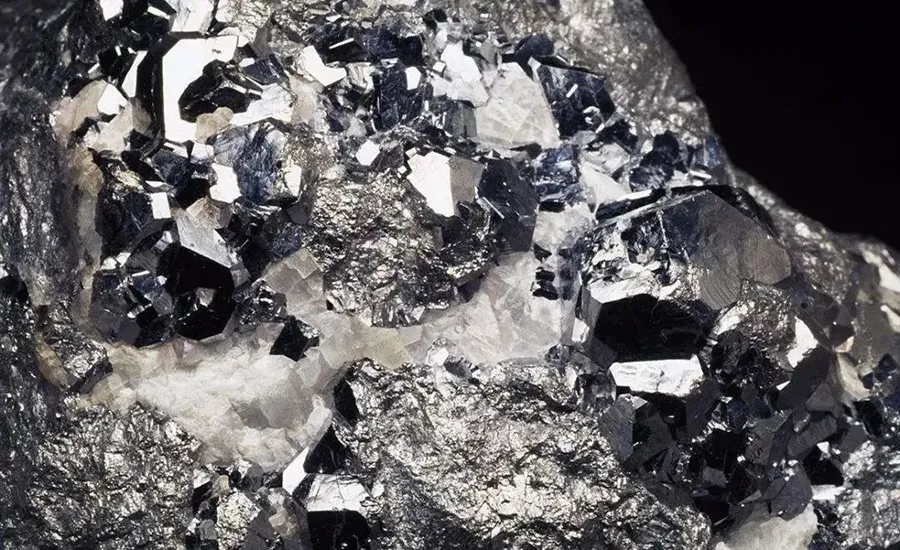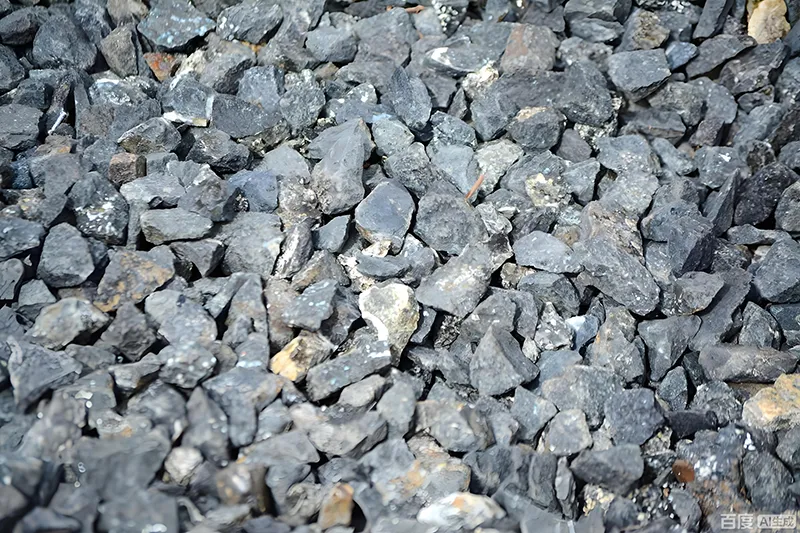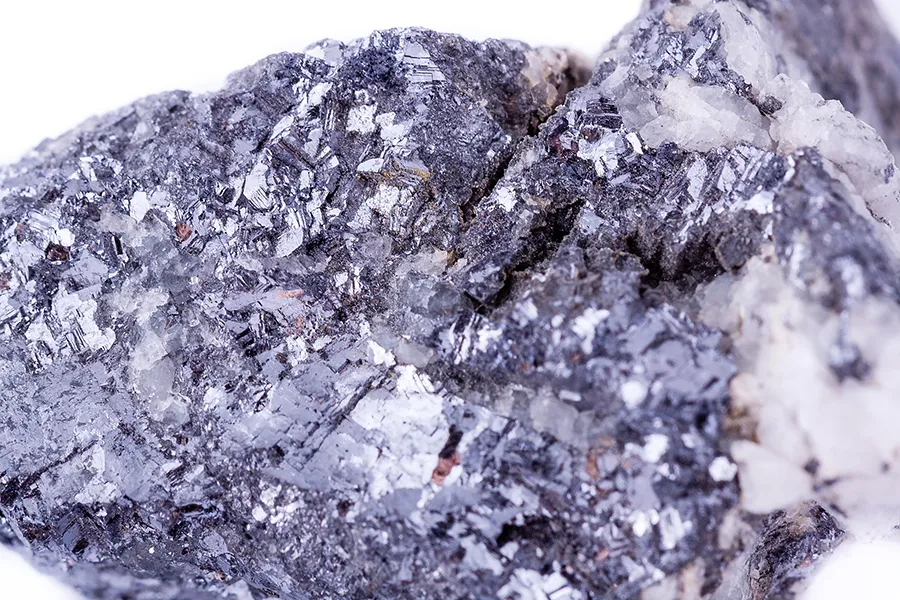
REO Minerals
7.6.1 Ore and Minerals Containing Rare Earth Oxide Elements(REOE) There are about 250…

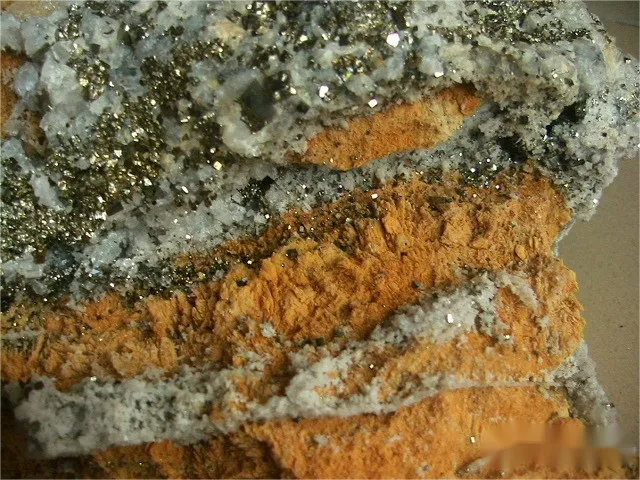
7.2 Copper Ore
7.2.1 Types and Deposits of Copper Ores
Copper is mainly used in industrial applications,electrical/electronic equipment and consumer products such as utensils.According to the data in 2019,China has the world’s largest copper reserve.It is used in several alloys such as:(1)to make stainless steel with iron and nickel, (2)to make bronze with tin,(3)to form brass with zinc.
7.2.1.1 Deposits of Copper Ore
The industrial types of copper deposits in the world include porphyry copper deposit,copper bearing sandstone deposit,copper bearing pyrite deposit,copper nickel sulfide deposit,copper uranium gold deposit,natural copper deposit,vein deposit,carbonate deposit and skarn deposit. The first four types are the most important,accounting for 96%of the total copper reserves in the world.Porphyry copper deposits account for more than half of the world’s copper reserves.
The industrial types of copper deposits in China include porphyry copper deposit,copper bearing pyrite deposit,layered copper deposit,skarn copper deposit,copper bearing sandstone deposit,copper nickel sulfide deposit and vein copper deposit.There are several large and super large copper mines with proven reserves of more than 5 million tons in China,including Hami in Xinjiang,Qulong in Tibet,Pulang in Yunnan,Jiangxi and Jiangda Yulong in Tibet,etc.
The characteristics of China’s copper deposits are as follows:
(1)Five obvious concentration areas:the middle and lower reaches of the Yangtze River, Changdu,southern Sichuan to central Yunnan,Jinchuan Baiyin in Gansu Province and Zhongtiaoshan.
(2)Most of them are comprehensive deposits with many associated components.The gold associated with copper accounts for 78%of China’s associated gold reserves,the silver associated with copper accounts for 26%of China’s associated silver reserves,the cobalt associated with copper accounts for half of China’s cobalt reserves,and a large number of platinum group metals, molybdenum,lead,zinc,sulfur,etc.,which bring huge economic benefits to the development and utilization of copper mines.
(3)Among the proved reserves,87%are sulfide ore,10%are oxidized ore and only 3%are mixed ore.
7.2.1.2 Industrial Types
According to the relative content of copper oxide minerals in the ore,copper ore can be divided as copper oxide ore where oxidation rate is more than 30%,mixed copper ore where oxidation rate is 10%-30%,or copper sulfide ore where oxidation rate is less than 10%.According to the valuable components,copper ore can be divided into single copper ore and complex copper ore,such as copper sulfur ore,copper nickel ore,etc.Copper sulfur ore refers to the ore whose target minerals are copper sulfide and iron sulfide.It mainly occurs in copper bearing pyrite deposits,and a few in skarn copper deposits.Copper iron ore refers to the ore which contains magnetite in addition to copper minerals. Lead,zinc,nickel,cobalt,
molybdenum,tungsten oxide,bismuth,gold,silver and pyrite are often associated with copper deposits and should be comprehensively evaluated and considered to recover when the content reaches a certain value.
The ore structure of copper ore can be massive(dense)or disseminated.
7.2.1.3 Natural Types of Copper Minerals
There are more than 250 kinds of copper minerals and copper bearing minerals found in the earth’s crust,occuring mainly as sulfide and its similar compounds,copper oxides,natural copper, sulfate,carbonate and silicate of copper.Most of the copper bearing minerals have bright and eye-catching colors,such as gold yellow chalcopyrite,bright green malachite,dark blue covellite,etc.
Copper is a kind of sulfophilic element,and copper ore usually occurs as sulfide ore.Only under the condition of strong oxidation,oxide is formed.According to the genesis and chemical composition,copper minerals can be divided into primary copper sulfide minerals such as chalcopyrite,secondary copper sulfide minerals such as chalcocite,and copper oxide minerals such as malachite.
Copper also has a certain iron affinity,which can be aggregated with iron,nickel,cobalt and other elements in basic and ultrabasic magma.
The main copper sulphides involve chalcopyrite CuFeS₂containing 34.56%copper,bornite Cu₃FeS₃containing 76.33%copper,chalcocite Cu₂S containing 79.83%copper,and covellite CuS containing 66.44%copper.
The main copper oxide ores involve malachite CuCO₃·Cu(OH)₂,with copper content of 57.5%,azurite 2CuCO₃·Cu(OH)₂with copper content of 55.3%,cuprite Cu₂O with copper content of 88.8%,chrysocolla CuSiO₃·nH₂O,with copper content of 36.1%.
Chalcopyrite is an important primary copper mineral.Many secondary copper minerals come from it.CuSO₄solution can be formed when chalcopyrite is oxidized on the surface,and malachite or azurite is formed when limestone is encountered in the oxidation zone.Under reduction conditions,primary chalcopyrite,pyrite,and galena may react to form chalcocite(Cu₂S), covellite(CuS),bornite(Cu₅FeS₄)and so on,forming secondary enrichment zone of copper deposit.
7.2.2 Floatability of Copper Sulfides
Sulfide minerals generally have good floatability and gangue can be effectively removed by flotation.However,sulfides of iron,cobalt,molybdenum and other metals are often found in copper sulfides.Therefore,the focus of copper sulfide flotation is how to adjust the flotation behavior of various sulfide minerals by controlling the flotation process parameters.
Due to the similar floatability of sulfide minerals,they usually need to be separated by multi-stage flotation.In addition,the same flotation operation in each stage generally needs to be carried out several times continuously,such as one roughing,two cleaning and two scavenging,etc.to achieve effective separation.
The floatability of copper sulfide minerals shows some sequence.Those without iron,such as chalcocite and covellite have similar good flotability and are difficult to be depressed by cyanide and lime.Those minerals containing iron,such as chalcopyrite and bornite,are easily depressed by cyanide and lime in alkaline medium.
The anions of xanthate collectors are mainly chemically adsorbed with the cation Cu²+,so the minerals with more Cu on the surface have strong interaction with xanthate.The order of the reaction from strong to weak is chalcocite,covellite,bornite,and chalcopyrite.
The floatability of copper sulfide minerals is also affected by crystal size,dissemination size, and whether they are primary or secondary.It is difficult to float if the crystal and dissemination are too fine.Secondary copper sulfide is easy to oxidize,which results in more difficult floatability than primary copper sulfides.
7.2.2.1 Chalcopyrite CuFeS₂
Chalcopyrite is not easy to oxidize and can keep natural floatability in neutral and weak alkaline slurry for a long time.But its floatability will decrease in strong alkaline slurry of pH>10 because of the formation of iron hydroxide on the surface.
The most commonly used collector for chalcopyrite is xanthate,with which all chalcopyrite can float out in a wide pH of 3-12.Dithiophosphate,dithiocarbamate and thionocarbamates are also collectors of chalcopyrite.The selectivity of butyronitrile xanthate is better than that of xanthate and can be used for the flotation of chalcopyrite containing arsenopyrite.
Chalcopyrite is readily depressed by cyanide and oxidant in alkaline slurry.Cyanide is often used in the separation of copper and lead,while oxidant is often used in the separation of copper and molybdenum.Copper salt such as copper sulfate is sometimes used to activate chalcopyrite which is already depressed.
Chalcopyrite surface will be oxidized when it is finely ground in water,and then xanthic acid is easy to form firm adsorption with Cu²+on the surface.However,thiamine ester,double xanthate, etc.need to be added into the ball mill to contact with the newly liberated fresh surface when they are used as collectors.
7.2.2.2 Bornite Cu₅ FeS₄
The floatability of bornite is between chalcocite and chalcopyrite.It is easier for bornite to oxidize than chalcopyrite,and thus more collector is consumed than chalcopyrite.
Bornite can be floated in both acid and weak alkaline slurry using xanthate as collector,but the floatability decreases at pH>10.In the strong acid slurry,the floatability of bornite deteriorates significantly.Bornite can be easily depressed by cyanide.Sodium sulfide or a small amount of sulfuric acid can improve the floatability of bornite.
7.2.2.3 Chalcocite Cu₂S and Covellite Cu₂S·CuS₂
Chalcocite has the best floatability,but is easier to oxidize than chalcopyrite.
Xanthate and dithiophosphate are good collectors for chalcocite.All chalcopyrite can be floated by ethyl xanthate,ethyl dithiophosphate and ethyl double dithiophosphate in a wide pH range from 1 to 13.Chalcocite is not sensitive to pH,and it can still float at high pH because cuprous ethylxanthate is more stable than cupric hydroxide.
Depressants of chalcocite involve Na₂SO₄,Na₂S₂O₃,K₃Fe(CN)₆,K₄Fe(CN)₆and large amount of Na₂S.Cyanide has little depression on chalcocite because the copper ions on the surface are continuously dissolved,making cyanide lose its effictiveness.
The floatability of covellite is similar to that of chalcocite.
7.2.2.4 Tennantite 3Cu₂S·As₂S₃
Tennantite has small hardness and high brittleness.It is slimy and readily oxidized.When butyl xanthate is used as collector,the most suitable pH for tennantite flotation is 11 to 12.
Sodium carbonate is a better medium regulator than lime,because it may depress tennantite when free CaO is higher than 400g/m³.Sodium sulfide can activate oxidized tennantite surface at low dosage (30mg/L)and thus improve its floatability,but increase dosage can completely depress it.
7.2.2.5 Iron Sulfides
Iron sulfide minerals are mainly used in the production of sulfuric acid,and is an important chemical industrial raw material.They are widely distributed in sulfide deposits,so it is necessary to separate them from copper.
(1)Pyrite FeS₂.Slight oxidation will improve the floatability of pyrite but over oxidation will reduce its floatability.Pyrite can be collected by xanthate,dithiophosphate,dithiocarbamate.The pH of pulp has an obvious effect on its floatability.Acidic or weak alkaline slurry is helpfule for the formation of double xanthate on the surface of pyrite,which makes pyrite easy to float.In the acid medium such as pH=2,the formation of elementary sulfur can improve the floatability of pyrite,but in strong alkaline slurry caused by lime,the surface is depressed by coverage of FeO(OH). Cyanide and lime can both depress pyrite.Lime is often used to depress pyrite in order to separate it from chalcopyrite and sphalerite.The depressed pyrite can be activated by reducing pH with sulfuric acid,or by sodium carbonate or carbon dioxide.Copper sulfate is often added during activation.
(2)Pyrrhotite FeSn+1.Pyrrhotite is slimy and readily oxidized.It is relatively difficult to float. In alkaline and weak acid pulp,Cu²+or a small amount of sodium sulfide is used for activation, and then high-grade xanthate is used for collection.To depress pyrrhotite,lime,cyanide,sodium carbonate,etc.can be used.Potassium permanganate can be used to depress pyrrhotite in some special cases such as separation from arsenopyrite or pentlandite which are activated by copper sulfate or sodium sulfide.(3)Marcasite FeS₂.Marcasite is similar to pyrite in floatability but is easier to be floated than pyrite.Fig.7.1 is a process for the processing of single copper sulfide ore.