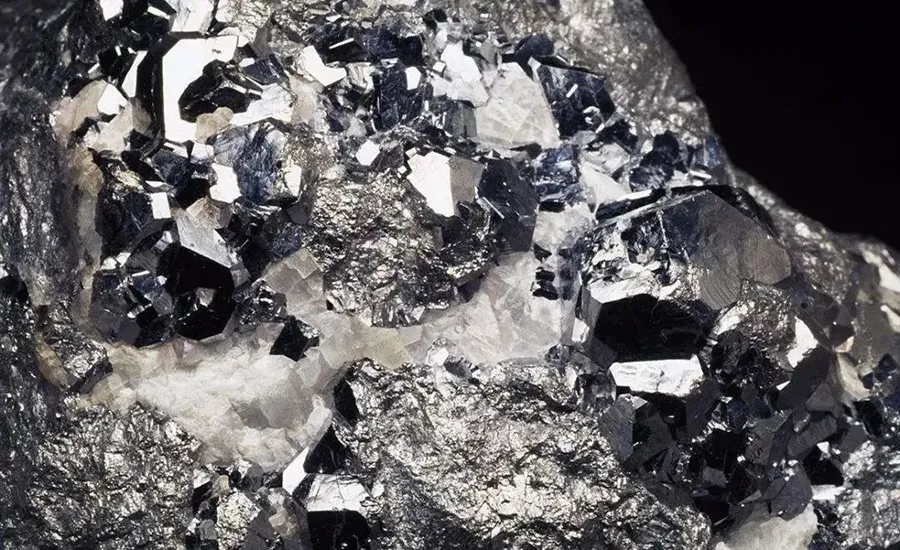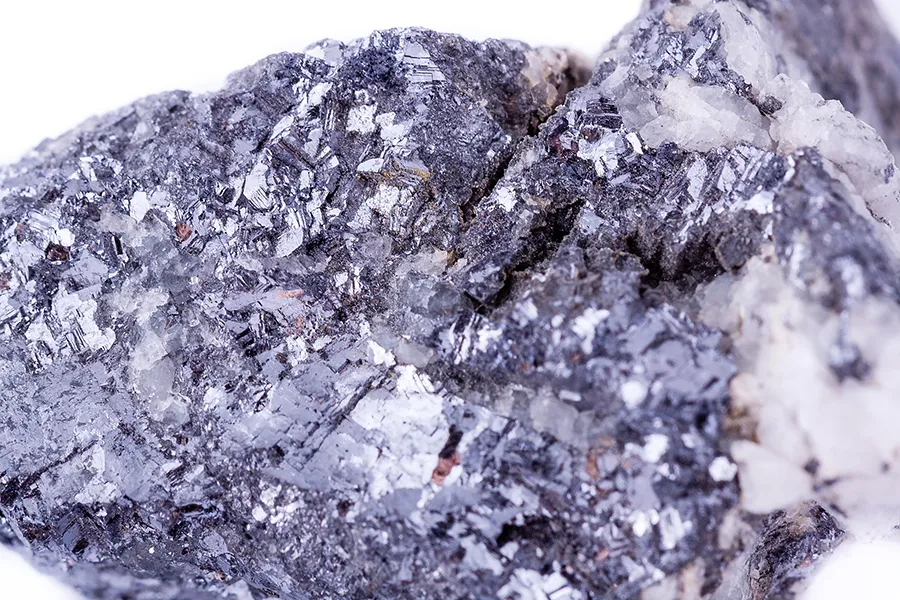
REO Minerals
7.6.1 Ore and Minerals Containing Rare Earth Oxide Elements(REOE) There are about 250…

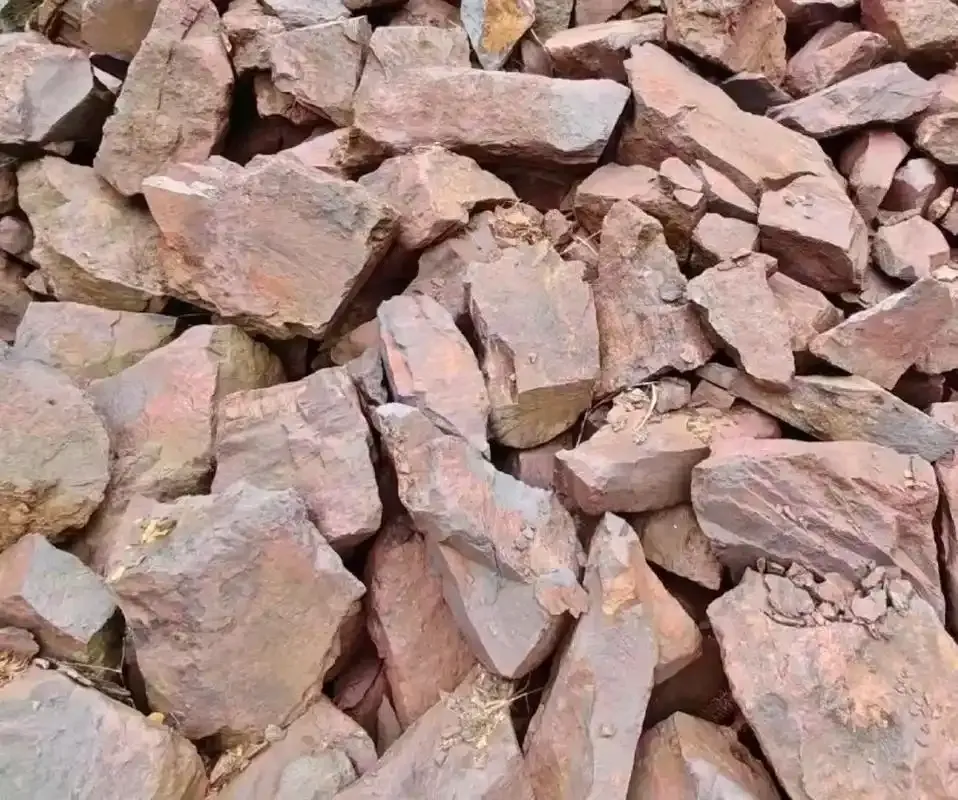
Beneficiation Process for Hematite
6.4.1 Washability of Hematite
The separation methods of hematite include magnetic separation,flotation,gravity separation,etc. These methods can be integrated to form different separation processes.
(1)Gravity washability.The density of hematite is generally more than 5.0g/cm³.When the density of common gangue minerals is 3-3.2g/cm³,the gravity concentration criterion is 1.82-2 and gravity concentration is relatively easy.But in the case of other iron minerals with the density of 4g/cm³,in relation to the same gangue minerals,the gravity concentration criterion is 1.36- 1.6,which means that gravity concentration is relatively difficult.Gravity concentration is easy for the coarse-grained ore with free particle size greater than 0.5mm,but the treatment capacity and separation efficiency can be significantly reduced for the medium or fine sized ore with free particle size between 0.15mm and 0.04mm.Gravity concentration is too difficult to be used to treat the finely disseminated iron ore with free particle size less than 0.03mm.
(2)Magnetic washability.Hematite is of weak magnetic,while pseudohematite has strong magnetism.Pseudohematite can be recovered in a medium magnetic separator of about 6000- 80000e.Hematite needs to be recovered in a high magnetic separator of 120000e.Specularite is between the two and needs a field strength of 8000-100000e.Limonite and siderite need a high intensity of more than 150000e.If there are weak magnetic silicate minerals such as garnet and biotite in gangue minerals,it is difficult to separate them from iron minerals in the high intensity magnetic field above 120000e.
(3)Floatability.The floatability decreases as a sequence of hematite,specularite,siderite, and limonite.If the ore contains nonferrous sulfide ore,flotation is generally used to separate sulfide ore from iron ore.When the ore contains calcite,dolomite,magnesite,fluorite,apatite and other easily floating calcium and magnesium minerals,flotation method is often used to separate them from iron minerals,but it is more difficult than the former,because the fatty acid collector has poor selectivity and can also collect iron minerals.In addition,the activation of iron minerals by a large number of metal ions in the pulp and the presence of slime make the selectivity even worse.
6.4.2 Beneficiation Process of Hematite
6.4.2.1 Roasting &Magnetic Separation ProcessRoasting &magnetic separation used to be one of the effective methods for the beneficiation of hematite but caused environmental problems.Reduction roasting in shaft furnace is a mature technique and has long-term production practice.It was used to treat lump ore of 20-75mm. Rotary kiln was used for the magnetization roasting of 0-20mm but has less production practice. Powder ore is commonly concentrated by the combination of high-intensity separation,gravity concentration,flotation and other methods.
In roasting process,the run-of-mine ore is sized and roasted,using magnetic pulley to close the roasting circuit.The main disadvantages of roasting &magnetic separation process involve high energy consumption,high production cost,and high coercive force after roasting which may cause entrainment and decrease the concentration index.Therefore,this kind of process is being replaced by other combined processes such as high-intensity magnetic separation and reverse flotation.
6.4.2.2 Flotation Processes
Flotation has been paid increasing attention because of its advantages of low size limit,high separation speed and easy control.It is used to concentrate magnetite quartzite,hematite quartzite and taconite.There are four kinds of flotation processes for iron ore:anionic positive flotation, cationic reverse flotation,anionic reverse flotation,and selective flocculation flotation,in which positive flotation is mainly used in hematite flotation.
In anionic positive flotation,soybean oil fatty acid or its sulfated soap,oxidized paraffin soap and crude tar oil can be used as collectors while the pulp is regulated to be weak alkaline(pH9- 9.5)by Na₂CO₃,or sodium petroleum sulfonate can be used as collector in weak acid pulp(pH 6-6.5)regulated by sulfate acid.The disadvantages of anionic positive flotation involve:frequent changes in technical index due to the poor adaptability to changes in ore type and mineral composition,worsening flotation operation conditions due to the increase of-10μm fine particle content caused by continuous grinding,poor recovery for coarse-grained free iron ore particles and rich locked particles.
In anionic reverse flotation,quartz is easily activated by Ca²+,Mg²+and iron ions,while the iron minerals can be effectively depressed by starch,sulfonated lignin and dextrin if the pH is greater than 10.Sodium hydroxide or mixed with sodium carbonate can be used as the medium regulator.The disadvantages of anionic reverse flotation involve high temperature requirements and difficult filtration caused by starch.
In cationic reverse flotation,alkaline pulp is generally needed to achieve the best depression on iron minerals.At the same time,the surface of silicate minerals is negatively charged and easy to interact with amine collectors.The disadvantages of cationic reverse flotation involve the big viscosity and difficult treatment of the froth,and its sensitivity to slime.Selective flocculation flotation process(Fig.6.4)uses cassava starch,corn starch,sodium humate and hydrolyzed polyacrylamide are used as flocculants to make iron minerals flocculate, and then reverse flotation is carried out after removing dispersed and suspended gangue slime. Dispersant can be sodium hydroxide,water glass,sodium hexametaphosphate,etc.Collectors can be anionic or cationic.
6.4.2.3 Combined Process of High and Low Intensity Magnetic Separation
Combined process of high and low intensity magnetic separation as shown in Fig.6.5 is traditionally used for the mixed ore of magnetite and hematite.But in the case of gangues contaminated by extremely finely disseminated magnetite,the magnetic difference between hematite and silicate gangue is so small that they may be mixed with each other under certain field strength,resulting in iron-bearing silicate misplacement into the iron concentrate.To further improve the grade,the concentrate of the high-intensity magnetic separation must be treated by other methods.In addition,the loss of fine-grained iron minerals(less than 0.03mm)in strong magnetic tailings is also large,so the recovery is low.
6.4.2.4 Combination of High-intensity Magnetic Separation and Floation
Combination of high-intensity magnetic separation and flotation is widely used to replace high- intensity magnetic separation process to improve the concentrate grade of hematite.In this process,the gangue minerals such as quartz and easy-sliming chlorite in the ore are discharged under the condition of rough grinding by high-intensity magnetic separation.Then flotation is used to produce qualified concentrate after the coarse concentrate of magnetic separation is further finely ground.
6.4.2.5 Combination of Gravity Concentration,Magnetic Separation and Floation
Combination process of gravity concentration,magnetic separation and floation is used for the associated ore of magnetite and hematite,where gravity concentration and magnetic separation are used to recover the magnetite first and flotation is used to recover the hematite then.In this process,staged grinding is adopted and the coarse and fine materials are beneficiated individually. The process can be carried out in the sequence of gravity concentration,magnetic separation and anionic reverse floatation,or in the sequence of magnetic separation,gravity concentration and
anionic reverse floatation.Gravity separation is mainly used for the separation of coarse-grained (2-20mm)and medium-sized hematite.Massive(>20mm)and coarse-grained ores are usually processed by heavy medium or jigging.Medium and fine-grained ores are processed by film concentration methods such as spiral concentrator,shaking table or centrifugal concentrator.
6.4.2.6 Preconcentration of Hematite OreHematite is sometimes preconcentrated by jigging,heavy medium vibrating chute,or electromagnetic induced roll.The particle size is 10-75mm for heavy medium separation with the cutting density of 2.7-3g/cm³,and-12mm for high-intensity magnetic separation with the field intensity over 1.5-1.7T.