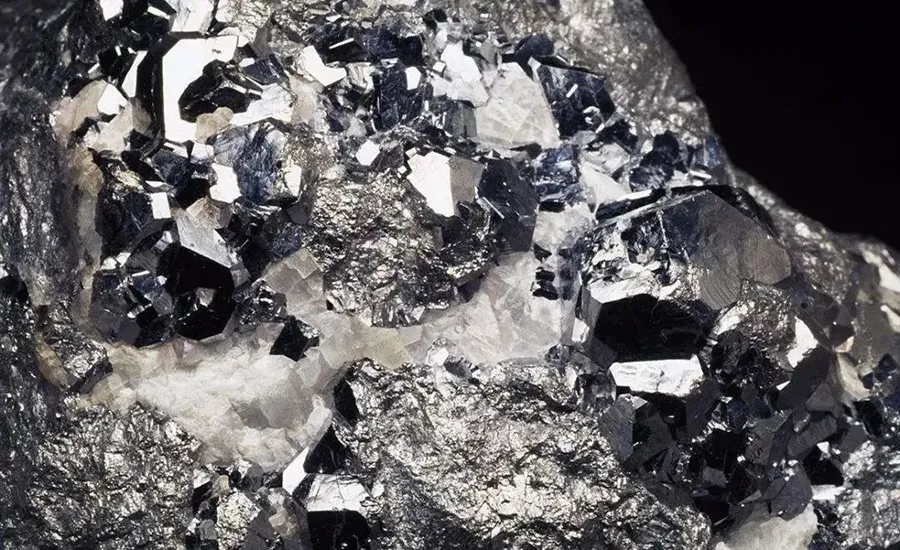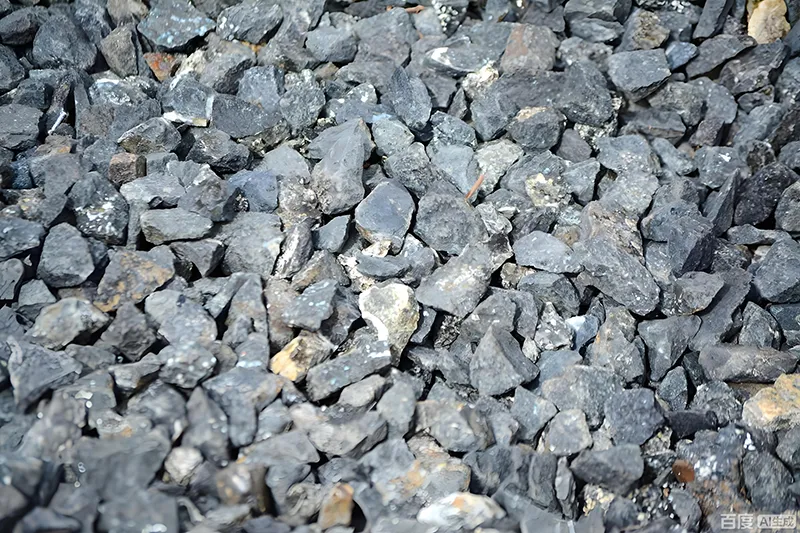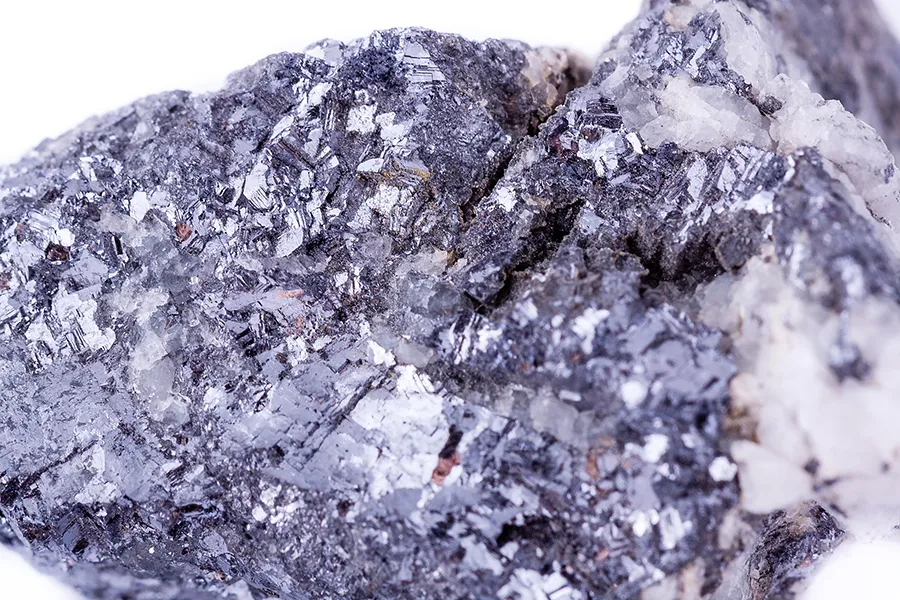
REO Minerals
7.6.1 Ore and Minerals Containing Rare Earth Oxide Elements(REOE) There are about 250…
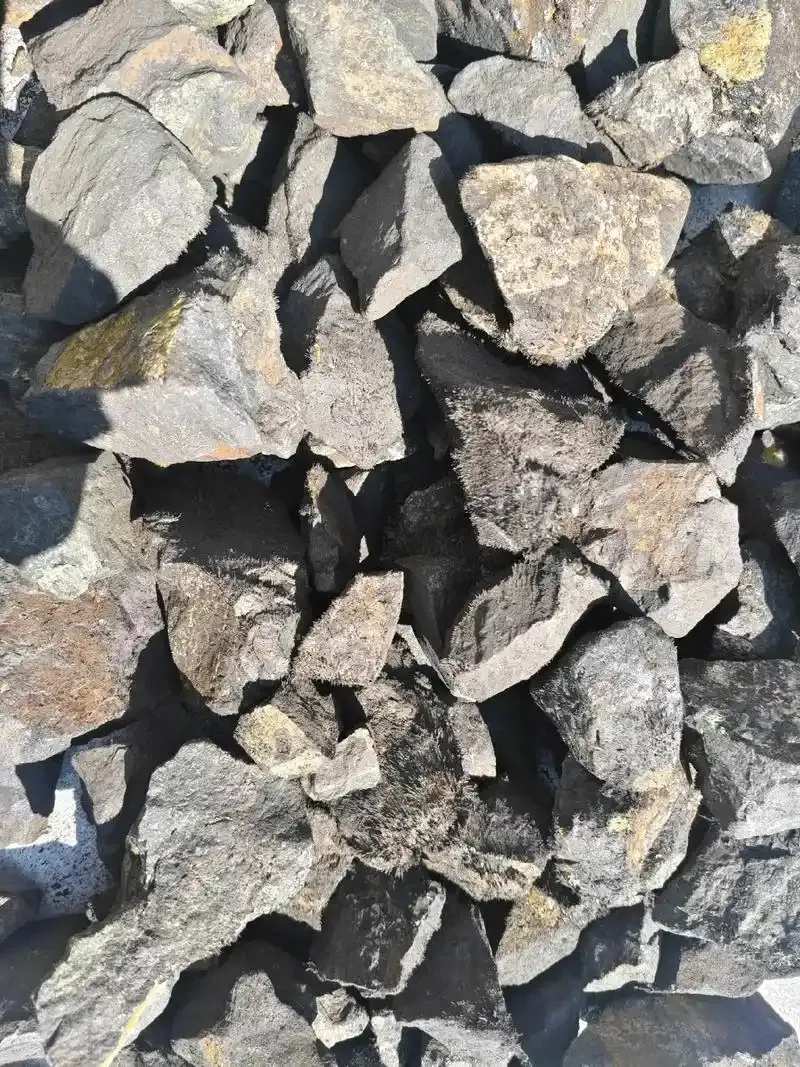
Beneficiation Process for other Iron Minerals
Specularite has weak magnetism with magnetic susceptibility of about 3.7×10⁻³m³/g,which is stronger among those minerals with weak magnetism,and often contains microgranular magnetite inclusions.Specularite has a Moh’s hardness of 5-6,and density 5-5.3g/cm³.It is difficult to be beneficiated.The beneficiability of specularite is similar to that of hematite and has basically the same beneficiation method.Common processes include roasting &magnetic separation process,the combination process of high -intensity magnetic separation and flotation,the combination process of gravity concentration and magnetic separation.
Limonite has poor washability compared to other iron ores.Its density and magnetism are not as high as magnetite,hematite or specularite,and readily sliming makes its beneficiation index worse.Due to the presence of crystal water,it is very difficult to achieve a concentrate grade of 60%by physical beneficiation,but the grade of the concentrate can be greatly increased after roasting due to the large loss from ignition.High-grade limonite is principaly used for sinter blending,while low-grade(TFe<35%)limonite has quite limit utilization,which can only obtain an increase in grade by 8%-10%after beneficiation.For those with high iron content and good washability,single beneficiation process can be used,including gravity separation,high- intensity magnetic separation and flotation,or combined processes,including roasting &magnetic separation process,flotation &high-intensity magnetic separation process,and gravity separation &high-intentsity magnetic separation process,etc.In the gravity concentration of limonite, washing,jigging and heavy medium separation can be used for coarse particles,and spiral concentrators or shaking tables can be used for fine particles.The flotation of limonite can be positive flotation or reverse flotation.It is greatly affected by slime,and thus desliming is necessary before flotation.The anionic collectors for limonite include stearic acid,oleic acid, alkylsulfonate and alkylsulfate,while cationic collectors include alkylamines and quaternary ammonium salts.In the magnetization roasting,limonite first removes crystal water at 300-400℃, and then magnetization roasting begins at 700-850℃.Reducers used can be gases such as H₂and CO or solids such as C.Siderite has a density of 3.7-4.0g/cm³,lower than that of other iron minerals.It is weak magnetic and needs very high field intensity.Moreover,most of siderite ores are difficult to beneficiate because most of them are finely disseminated,have complex composition but low grade.At present,part of the rich ore has been used for smelting iron and steel,which is less than 10%of the total reserves of siderite,and most of the poor ore has not been mined.Most of the ore that has been used is associated with magnetite and hematite.Siderite can be roasted at 600-900℃ and then processed by magnetic separation.It can also be processed by high-intensity separation using Shp or superconducting magnetic separators with a magnetic induction of 1.5- 2.5T.Flotation can be used after magnetic separation using cationic collectors.
Beneficiation Practice of Magnetite in Sijiaying Iron Mine
6.6.1 Nature and the Structure of Iron Ores
Sijiaying Iron Mine is one the three biggest iron mines in China,and the second biggest in Asia. The reserve involves 2.0 billion tons of magnetite ore and 0.3 billion tons of oxidized ore.
The mining is carried out in two phases.In the first phase,stopes No.2 and No.3 were mined.
The stope No.2 is open-pit mining with a scale of 6 million tons per year.The stope No.3 is underground mining with a scale of 1 million tons per year.In the second phase of the project, stope No.1 is mined as an open-pit,with a scale of 15 million tons per year,including 4 million tons of oxidized ore and 11 million tons of primary magnetite.
Sijiaying Iron Mine belongs to Anshan-type sedimentary metamorphic iron deposit.The ore in this area is mainly magnetite quartzite,while the shallow oxidation zone is mainly hematite quartzite.The mineral composition of the ore is relatively simple,mainly magnetite, pseudohematite,followed by hematite.The gangue mineral is mainly quartz,followed by actinolite,tremolite and a small amount of hornblende and pyroxene,and the trace minerals are apatite,pyrite,chalcopyrite,etc.In addition,there are later altered chlorite,carbonate and biotite and other minerals.
The basic structure of the ore is that the iron mineral and quartz form black-and-white parallel streaks,with the quartz streak 1-3mm at most,and there are also fine streaks of less than 1mm and bands of more than 5mm.
6.6.2 Beneficiation Process of Primary Magnetite
The run-of-mine ore is crushed in a three-stage crushing circuit with the final stage closed and preconcentrated by a dry separator.In the first phase of the project,a hydraulic gyratory crusher is used in the primary crushing,and a hydraulic cone crusher is used in the secondary and tertiary crushing,respectively.The maximum product sizes of the primary,the secondary and the tertiary crushings are 230mm,70mm and 12mm,respectively.Two circular-motion vibrating screens are used to close the crushing circuit,and the undersized-12mm materials from the screens are transported to the dry magnetic separation workshop.In the second phase of the project,the 50- 6mm materials from the secondary crushing are crushed in the tertiary crushing by two high- pressure roller mills,and the materials of-6mm are transported to the fine ore bin of the main workshop.The primary magnetite has a head grade of 26.83%.A whole magnetic separation process with staged grinding is used.In the first phase,drum separators of 1800 Gauss are used for the first three stages,with their concentrate fed into magnetic columns.In the first phase,the magnetic columns produce final concentrate.Due to the high field intensity of the three-stage magnetic separation,the concentrate grade is only about 62%-63%,and the capacity of the magnetic
column is insufficient,resulting in a low grade of final concentrate.In the second phase,the concentrate and the tailings of the magnetic columns are subjected to the fourth magnetic separation and condensed magnetic separation respectively,and the concentrate grade reaches 66.00%.The whole magnetic separation process is shown in Fig.6.6.
Fig.6.6 The whole magnetic separation process of the primary magnetite in Sijiaying Iron Mine
6.6.3 Beneficiation Process of Oxidized Ore
The oxidized ore in Sijiaying Iron Mine is crushed in a three-stage crushing circuit with the final stage closed,and beneficiated in a combination process,involving staged grinding,sizing,gravity concentration of coarse particles,magnetic separation of fine particles,and anionic reverse flotation.The maximum particle size of run-of-mine ore is 1000mm.In the first phase of the project,a hydraulic gyratory crusher is used in the primary crushing,and five hydraulic cone crushers are used in the secondary and tertiary crushing.The maximum particle sizes of the primary,the secondary and the tertiary crushings are 280mm,70mm and 12mm,respectively.In the second phase of the project,the 50-6mm materials from the secondary crushing are crushed in the tertiary crushing by two high-pressure roller mills,and the materials of-6mm are transported to the fine ore bin of the main workshop.The oxide ore shares the same crushing system with the primary magnetite in the second phase.
In the first phase,there are three stages of grinding,in which two closed grinding circuits are performed before concentration,and a condensifier before flotation.In the second phase as shown in Fig.6.7,grinding is of two stages,with one closed circuit before concentration,and condensifier is not necessary before flotation.The other parts of the flowsheet of the two phases are almost the same.The crushed oxidized ore undergoes a grinding of closed circuit and then classified by hydrocyclone groups.The coarse materials,i.e.the underflow of the hydrocyclones, are fed into gravity concentration circuit,where spirals are used to produce final concentrate through a roughing and a cleaning operation.The iron minerals in the spiral tailings are further recovered by low-and middle-intensity magnetic separators,and then reground and returned to
the hydrocyclones in front of the spiral rougher.Low-and high-intensity magnetic separation recovers iron minerals from the fine materials,i.e.the overflow of the hydrocyclone,and feeds them to flotation to produce final product.The flotation circuit is composed of one roughing,one cleaning and two scavenging operations.The tailings from the middle-and the high-intensity separators are discharged as final tailings.
In flotation,NaOH,starch,Ca0 and GK68 were used as pH regulator,depressant of iron minerals,activator of quartz,and collector,respectively.In view of the fact that the circulating water contains some Ca²+,the use of CaO has been stopped gradually.Based on the optimization of the flotation parameters,the pipelines and the floation machine arrangement,the flotation concentrate has increased its grade from 65.71%to 67.51%,and the tailing has decreased its grade from 18.51%to 16.94%.
The main equipment used in the grinding and beneficiation process in the second phase is listed in Table 6.2.
Table 6.2 The grinding and beneficiation equipment of primary magnetite used in Sijiaying Iron Mine
| No. | Types and Specification | Quantity | Power/kW |
| 1 | Overflow ball mill MQY5.5m×8.5m | 8 | 4500 |
| 2 | hydrocyclone group φ660mm×10 | 8 | |
| 3 | hydrocyclone group φ500mm×10 | 6 | |
| 4 | Spiral rougher φ1500mm | 174 | |
| 5 | Wet drum separator CTB-1230 | 125 | 11 |
| 6 | Rotary screen type precleaner SL-1429mm×1500mm | 12 | 2.2 |
| 7 | Vertical ring pulsating middle magnetic separator Slon-2000 | 8 | 5.5 |
| 8 | Vertical ring pulsating high gradient magnetic separator Slon-2000 | 4 | 86.9 |
| 9 | Five way overlapping high frequency fine screen | 24 | 3.75 |
| 10 | Magnetic column φ600mm | 66 | 3 |
| 11 | Slurry mixing tank φ3.5m×3.5m | 3 | 37 |
| 12 | Flotation machine rougher XCF-50 | 1 | 90 |
| 13 | Flotation machine rougher KYF-50 | 6 | 75 |
| 14 | Flotation machine cleaner XCF-50 | 1 | 90 |
| 15 | Flotation machine cleaner KYF-50 | 4 | 75 |
| 16 | Flotation machine scavenger I XCF-50 | 工 | 90 |
| 17 | Flotation machine scavenger I KYF-50 | 3 | 75 |
| 18 | Flotation machine scavengerⅡXCF-50 | 1 | 90 |
| 19 | Flotation machine scavenger ⅡKYF-50 | 2 | 75 |
| 20 | high-efficient thickener before high-intensity magnetic separation φ22m | 1 | 15 |
| 21 | high-efficient thickener before flotation φ25m | 1 | 15 |
| 22 | high-efficient thickener for concentrate φ20m | 工 | 15 |
6.7 Beneficiation Practice in Diaojuntai Concentrator
Diaojuntai concentrator of ANSTEEL GROUP CORPORATION is the largest red iron ore concentrator in China.It is designed to process 9 million tons of iron ore annually and produce 3 million tons of iron concentrate annually.In 1998,it was put into operation,and in 2003,it realized the technical indicators of 6.77 million tons of raw ore treatment,2.63 million tons of concentrate output.The head grade,the concentrate grade,and the tailings grade are 29.86%, 67.54%,and 8.31%,respectively.The metal recovery is 82.32%.The annual economic benefit is more than 400 million yuan,which is of international leading.
The process involves low-intensity magnetic separation,high intensity magnetic separation and flotation.The combination processes of magnetic separation and various flotation were compared extensively,including anionic reverse flotation process,acid positive flotation process,and cationic reverse flotation.Finally the process was determined to involve continuous grinding,low- intensity and high-intensity magnetic separation,and anionic reverse flotation.The characteristics of this process are as follows:(1)continuous grinding avoids the negative impact that happened in the staged grinding because of the large fluctuation of regrinding volume;(2)low-and high- intensity magnetic separations remove a large number of primary and secondary slimes in the grinding products,improve the flotation grade,and provide good process conditions for anionic reverse flotation;(3)high-intensity magnetic separators are ideal equipment for tailing disposal in red iron ore beneficiation,which rejected more than 60%of tailings,and the anionic reverse flotation is an ideal concentration operation for obtaining high-grade concentrate from red iron ore, which produces 100%of the concentrate.
6.8 Smelting of Iron Concentrate
The final product of iron ore dressing plant is iron oxide,which must be further smelted into iron and steel.Fine iron powder can not be directly added to the ironmaking furnace,but should be pre-pelletized or sintered.Iron powder can be formed by direct sintering,pressing with binder,or rolling into small balls and then sintering.
Ironmaking is the reduction of iron oxide to iron.The iron concentrate is loaded into the blast furnace together with coke and limestone.At high temperature,iron,part of silicon and manganese in the ore are reduced by coke to form molten pig iron with carbon,and gangue in the ore reacts with limestone to form slag(Fig.6.8).The two flows out from the taphole and slag outlet of the blast furnace respectively.The product of ironmaking is called pig iron,which contains more carbon and other impurities,and can be used for casting or steelmaking.The reaction of steelmaking is oxidation reaction,also known as oxidation smelting.Under certain conditions,oxygen reacts with silicon,manganese,phosphorus,sulfur and some iron melted in pig iron to form oxides.The solubility and density of these oxides in molten steel are
small,and they float out of molten steel and form slag.The molten steel is cast into ingots,which are further shaped and sold by the rolling mill(workshop).